Health and Safety Policy for Landscape Gardening Professionals
 Purpose and scope: This document sets out the health and safety policy for landscape gardening teams, landscape gardeners and gardening operatives engaged in garden maintenance and groundskeeping. It applies to all staff, contractors and temporary workers involved in landscaping, planting, turfing, pruning and hardscape works. The policy aims to minimise risk through proactive management, clear responsibilities and consistent safe working practices for all forms of garden care and landscape maintenance.
All personnel must take reasonable care for their own safety and for the safety of others who may be affected by their work. Supervisors and lead landscapers have a duty to ensure that risk assessments are current, that appropriate personal protective equipment (PPE) is available, and that plant and tools are maintained in safe working order. Staff must report hazards, near misses and incidents promptly so corrective action can be taken without delay.
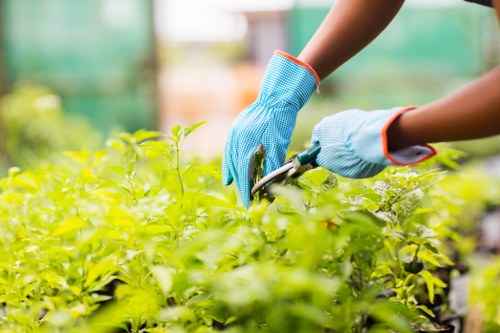 Risk assessment and planning: Before starting any task, teams will carry out a documented risk assessment specific to the site and activity. This includes consideration of manual handling, use of powered equipment, working near public access, underground services, chemical application and weather-related hazards. The assessment must identify control measures such as exclusion zones, signage, traffic management and safe systems of work tailored to garden landscaping and grounds maintenance activities.
Key responsibilities and training
Managers, horticultural supervisors and landscape contractors are responsible for ensuring that all staff are competent for the tasks they undertake. This includes induction training, tool-specific instruction and refresher sessions. Records of training and qualifications should be maintained and reviewed regularly. Employees must be trained in the safe operation of mowers, chainsaws, brushcutters, stump grinders and other landscaping equipment.
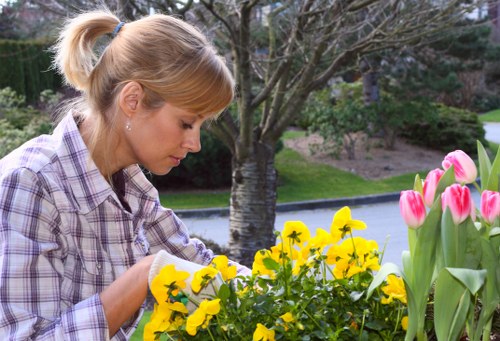 Personal protective equipment: Appropriate PPE must be worn for each task. Typical items include safety helmets, eye and hearing protection, high visibility clothing, cut-resistant gloves, chainsaw protective trousers and sturdy footwear. PPE is a control measure that complements engineering and administrative controls and must be used correctly and inspected regularly.
Specific measures for chemical and pesticide use include safe storage, correct dilution, use of compatible PPE and clear labelling. Only trained personnel should handle hazardous substances, and material safety data information must be accessible on site. Environmental precautions must be observed to protect soil, waterways and non-target plants.
Safe work practices and equipment
Plant and equipment must be checked before use and any defects reported. Pre-start checks and routine maintenance reduce the risk of mechanical failure and injury. Only trained operatives shall use powered tools and machinery; safe guarding, emergency stop devices and manufacturer instructions must always be followed. For manual handling tasks, use mechanical aids where possible and apply team lifting techniques to prevent musculoskeletal injury.
 Traffic and public safety: When operating in areas with pedestrian or vehicle movement, establish exclusion zones, use clear signage and employ banksmen or traffic marshals as required. Landscaping teams must plan access and egress routes to keep the public, children and pets away from active works, particularly when using machinery or applying chemicals.
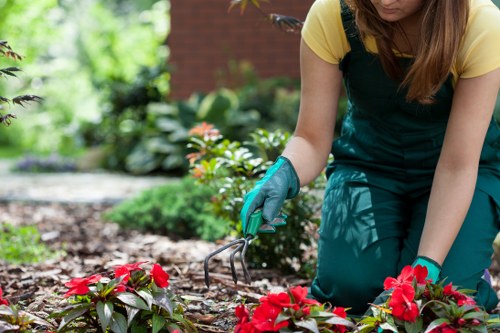 Emergency procedures and incident reporting: First aid provisions must be available and appropriate personnel trained in first aid response. Emergency assembly points and communication procedures should be clear to all staff. All incidents, injuries and near misses must be reported and investigated to identify root causes and implement corrective actions. Records of incidents, risk assessments and safety checks should be retained and reviewed periodically.
Operational controls and environmental protection: Use of noise controls, dust suppression and correct waste disposal methods protects both workers and the environment. When working near watercourses or in ecologically sensitive areas, crews should adopt additional safeguards to prevent contamination and habitat disturbance. Sustainable practices and prudent chemical use support long-term garden health.
Contractor and visitor management: Subcontractors and visitors must be made aware of site-specific safety rules and supervised when necessary. All external personnel should comply with company safety standards and be covered by adequate insurance and competency checks. Permit-to-work systems should be used for high-risk activities and documented before start.
Monitoring, review and continuous improvement: The policy will be reviewed periodically to ensure it remains effective and reflects best practice in landscaping and garden care. Regular site audits, toolbox talks and consultation with workers encourage ownership of safety. Management will act on findings and ensure resources are available to maintain safe systems of work.
Summary of key controls:
- Conduct site-specific risk assessments for landscape gardening and garden maintenance.
- Provide appropriate PPE and ensure correct usage.
- Maintain and inspect plant and equipment before use.
- Ensure training and competence of all horticultural staff and landscapers.
- Implement traffic management and public protection measures.
- Report, record and investigate incidents; act on findings.
Commitment: The organisation is committed to maintaining a safe working environment for all employees engaged in landscaping, garden care and grounds maintenance. Everyone has a role to play in implementing this policy and protecting the health and wellbeing of colleagues, clients and the public.